Pratham Finance
Machinery Loan in India: Eligibility, Documents, Benefits & How to Apply | Pratham Finance, Gwalior
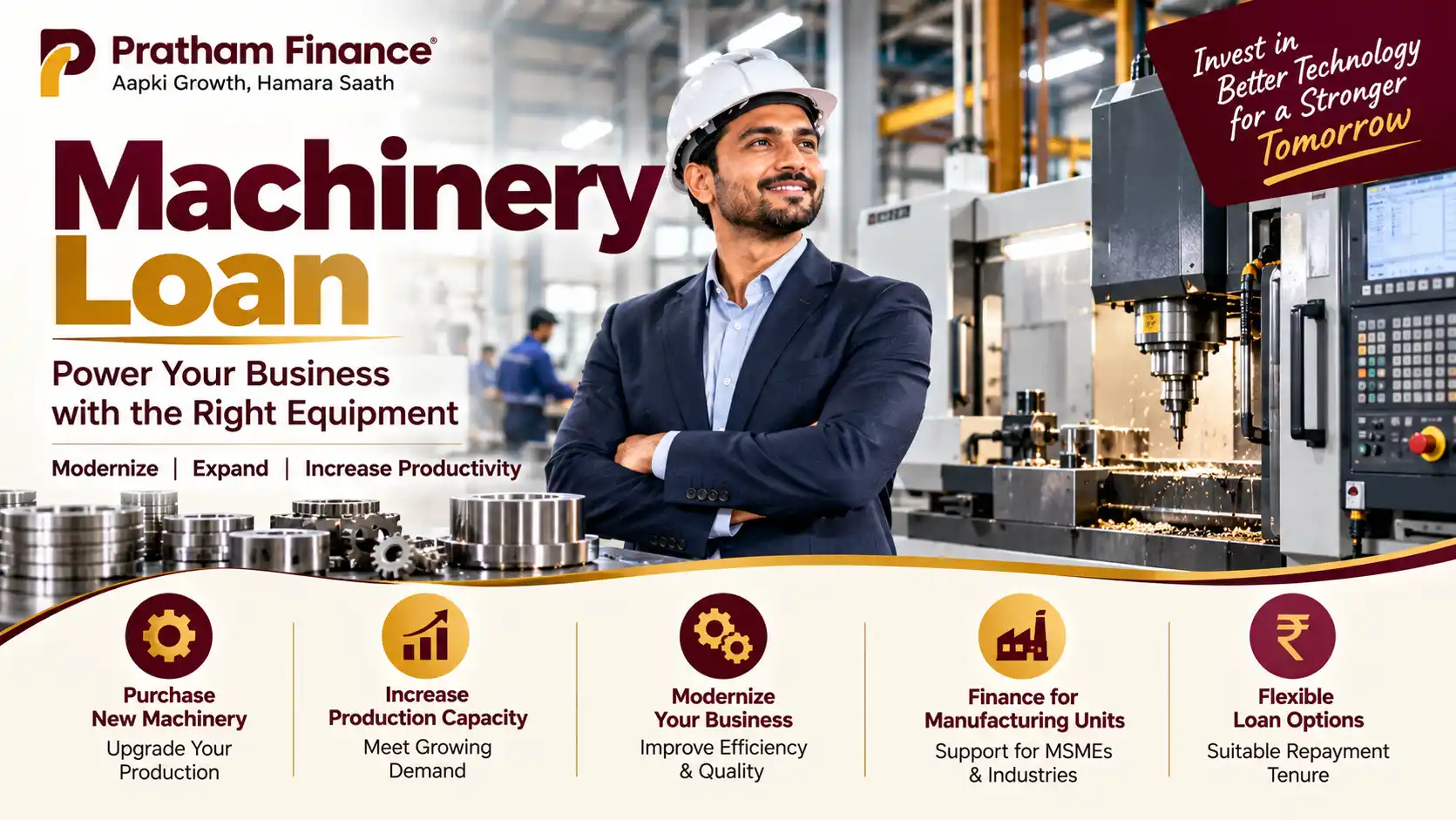
Looking for a machinery loan in India? Explore machinery finance for manufacturing, industrial equipment and business expansion. Learn eligibility and documents with Pratham Finance, Gwalior.
Introduction: Need Finance to Purchase Machinery for Your Business?
Are you planning to purchase new machinery, upgrade existing equipment or increase your production capacity? A machinery loan can help your business invest in equipment without paying the entire purchase cost from its available cash reserves.
For manufacturers and growing businesses, machinery is often essential for improving productivity, maintaining product quality and meeting customer demand. However, purchasing industrial equipment can require a substantial investment. Arranging the necessary funds while managing salaries, inventory, supplier payments and other operating expenses can be challenging.
A machinery loan is a financing option that may help eligible businesses purchase new or approved used machinery, manufacturing equipment and other business assets. Depending on the lender and product, financing may cover part or all of the eligible equipment cost, subject to the applicable conditions.
If you are looking for machinery loan assistance in Gwalior, Pratham Finance can be approached to enquire about suitable financing options, subject to its current services and the eligibility criteria of the relevant lender.
In this guide, we explain machinery loans, their types, eligibility requirements, documents, application steps and practical ways to prepare a stronger financing proposal.
Key Takeaways
- A machinery loan can help eligible businesses purchase equipment for manufacturing, processing, packaging and other business activities.
- Financing may be available through banks, NBFCs and other eligible financial institutions.
- Eligibility depends on business performance, credit history, repayment capacity, equipment cost and lender policies.
- Depending on the product, the financed machinery may serve as security.
- Documents may include bank statements, financial statements, GST records, machinery quotations and business registration documents.
- Machinery finance can help businesses preserve working capital, but repayments must fit the business's cash flow.
- Businesses in Gwalior can approach Pratham Finance to enquire about machinery financing options.
What Is a Machinery Loan?
A machinery loan is a financing facility used to purchase eligible machinery or equipment for business purposes.
It may be suitable for businesses that want to increase production, replace outdated equipment, introduce automation or establish a new manufacturing process.
Instead of paying the entire equipment cost upfront, an eligible business may finance the purchase and repay the borrowed amount through scheduled instalments.
The loan amount, interest rate, tenure, margin contribution, security and repayment schedule depend on the lender, applicant profile and equipment being financed.
Example: Machinery Loan for a Manufacturing Business
Suppose a manufacturing unit in Gwalior wants to purchase a CNC machine costing ₹25 lakh to increase production capacity and improve precision.
The business may explore machinery finance from a bank or NBFC. The lender could assess the business's financial statements, existing liabilities, credit profile, machinery quotation and expected ability to repay the loan.
Depending on the product, the business may need to contribute part of the purchase cost from its own funds.
The final financing amount, interest rate, tenure and security requirements would be determined by the lender.
This is an illustrative example, not a guaranteed loan offer or approval.
Why Do Businesses Need Machinery Finance?
Machinery finance can support businesses at different stages of growth.
1. Purchase New Machinery
Businesses may need new equipment to increase output, improve accuracy or meet higher production requirements.
Examples include:
- CNC machines and fabrication equipment.
- Packaging and labelling machines.
- Food processing equipment.
- Textile and garment manufacturing machinery.
- Printing and industrial production equipment.
- Plastic processing and moulding machines.
Financing availability depends on the equipment type and lender policy.
2. Upgrade Existing Equipment
Outdated machinery can result in higher maintenance costs, production delays and inconsistent product quality.
A suitable machinery loan may help an eligible business replace inefficient equipment with newer technology.
Before borrowing, compare the expected productivity improvements with the total cost of financing.
3. Expand Manufacturing Capacity
When orders increase, a business may need additional machinery to manufacture more products or reduce production bottlenecks.
Financing may help support the investment while allowing the business to retain some cash for inventory, salaries and routine expenses.
4. Improve Automation and Productivity
Automation equipment can help businesses improve consistency, reduce repetitive manual work and streamline operations.
The financial benefits depend on the nature of the process, implementation costs, employee training and expected demand.
5. Establish a New Manufacturing Unit
A new manufacturing business may require several machines, installation work, electrical systems and supporting equipment.
A machinery loan may form part of the overall funding plan. The business may also need separate financing for working capital, factory premises or other project expenses.
6. Purchase Eligible Agricultural or Commercial Equipment
Depending on the lender and product, machinery financing may also be available for eligible agricultural, processing, construction or other commercial equipment.
The applicant should confirm that the intended asset and business activity qualify under the selected financing product.
Types of Machinery Loans Available in India
Different financing options may be appropriate depending on the equipment, business requirements and repayment plan.
Financing optionSuitable purposeKey considerationMachinery term loanPurchasing eligible new machineryRepayment is spread over an agreed tenureIndustrial equipment financeManufacturing and factory equipmentEquipment and business financials may be assessedMSME machinery loanEligible machinery purchases by micro, small and medium enterprisesEligibility varies by lender and applicable schemeUsed machinery financePurchasing eligible pre-owned equipmentAge, condition, valuation and resale value may affect approvalEquipment leasingUsing eligible equipment through a lease arrangementOwnership and end-of-term conditions depend on the contractCommercial equipment financeEligible machinery used in commercial operationsProduct conditions depend on the equipment and business activityProject-based machinery financeEquipment purchases forming part of a larger industrial projectThe lender may evaluate the complete project and projected cash flow
Which option is right for your business?
A machinery term loan may suit a straightforward equipment purchase, while a larger factory project may require a broader financing arrangement.
Compare the total borrowing cost, repayment schedule, margin contribution, security requirements and permitted use of funds before choosing a product.
Machinery Loan Eligibility Criteria
Eligibility requirements differ between lenders. The following factors are commonly considered when evaluating a machinery financing application.
1. Business Type
Eligible applicants may include:
- Sole proprietorships.
- Partnership firms.
- Limited liability partnerships.
- Private limited companies.
- Manufacturing businesses.
- Eligible MSMEs.
- Industrial and processing units.
- Other qualifying commercial enterprises.
The permitted applicant categories depend on the specific product.
2. Business Experience
Lenders may consider how long the business has operated and whether it has an established record of sales and financial activity.
New businesses may also explore suitable financing options, but the lender may require additional information about the promoters, project and repayment plan.
3. Turnover and Profitability
Business revenue helps establish the scale of operations. Profitability and cash flow help demonstrate whether the business can afford the proposed repayments.
There is no universal minimum turnover requirement across all machinery loan products.
4. Credit History
The lender may review the business's credit profile and the credit history of relevant promoters or guarantors, where applicable.
A consistent repayment record can support the assessment.
5. Repayment Capacity
The business should be able to meet the proposed instalments while managing operating expenses and existing financial obligations.
6. Machinery Details
The lender may review:
- Machinery type and specifications.
- Supplier quotation.
- Purchase cost and applicable taxes.
- Installation and commissioning expenses.
- Expected useful life of the equipment.
- Expected contribution to business operations.
7. Security Requirements
Some machinery loans are secured against the financed equipment. Depending on the product and applicant profile, additional collateral, guarantees or a promoter contribution may be required.
Do not assume that every machinery loan is collateral-free.
Documents Required for a Machinery Loan
Preparing the required documents in advance can help reduce avoidable delays.
The exact checklist depends on the business structure, loan amount, equipment and lender.
1. KYC Documents
- PAN card of the applicant and relevant business entity.
- Accepted identity and address proof.
- Photographs, where required.
- KYC documents for relevant directors, partners or guarantors.
2. Business Registration Documents
- Business registration certificate, where applicable.
- Udyam Registration Certificate, if applicable.
- GST registration and applicable returns.
- Partnership deed or company incorporation documents, where applicable.
- Business address proof.
- Relevant licences and registrations.
3. Financial Documents
- Recent bank statements, commonly covering 6–12 months depending on lender requirements.
- Income-tax returns for the requested period.
- Profit and loss statements.
- Balance sheets and other financial statements, where applicable.
- Existing loan details and repayment schedules.
- Information about current turnover and operating expenses.
4. Machinery-Related Documents
- Quotation from the machinery supplier.
- Equipment specifications and technical details.
- Pro forma invoice or purchase order, where available.
- Installation and commissioning estimates, where applicable.
- Details of the supplier and proposed equipment.
- Additional valuation or inspection documents, if requested.
5. Project Documents
For larger equipment purchases or a new manufacturing unit, the lender may request:
- A business plan or detailed project report.
- Project cost breakdown.
- Expected production capacity.
- Estimated revenue and operating expenses.
- Projected cash flow and repayment plan.
- Information about the factory premises, where relevant.
Ask the lender for its exact checklist before submitting the application.
How to Apply for a Machinery Loan in India
Follow these steps to prepare your application.
Step 1: Identify the Machinery You Need
Clearly define the equipment you want to purchase and explain how it will support your business.
For example, the purpose may be to increase production capacity, reduce manufacturing delays or improve product quality.
Step 2: Obtain a Machinery Quotation
Request a detailed quotation from a supplier. Check the equipment price, taxes, delivery charges, installation costs, warranty and after-sales support.
For used machinery, ask about its condition, maintenance history and expected remaining useful life.
Step 3: Calculate the Total Funding Requirement
Include the machinery cost and other eligible expenses, such as installation and commissioning.
Determine how much you can contribute from your own funds and how much financing you require.
Step 4: Review Your Business Financials
Organise your bank statements, tax returns, financial statements and existing loan details.
Assess whether your business can comfortably meet the proposed repayments.
Step 5: Compare Lenders and Financing Options
Explore suitable offers from banks and NBFCs.
Compare interest rates, processing fees, tenure, margin contribution, security conditions and prepayment terms.
Step 6: Submit Your Application
Provide accurate information and the documents requested by the lender.
The lender may ask for additional records, machinery details or clarification about the purpose of the purchase.
Step 7: Complete Verification
The lender may evaluate your business, credit history, financial performance and machinery quotation.
Depending on the product, it may also inspect or value the equipment.
Step 8: Review the Sanction Letter
Before accepting the loan, check:
- Approved amount.
- Interest rate and calculation method.
- Repayment tenure and instalment schedule.
- Processing fees and other charges.
- Margin contribution, if applicable.
- Security and guarantee requirements.
- Disbursement conditions.
- Prepayment or foreclosure charges, where applicable.
Accept the offer only after understanding the total cost and repayment obligations.
Government Schemes and Machinery Financing Support
Eligible businesses may explore government-supported programmes that facilitate credit or support specific categories of enterprise. However, a scheme's existence does not mean that every machinery purchase automatically qualifies.
1. MSME Credit Guarantee Support Through CGTMSE
The Credit Guarantee Fund Trust for Micro and Small Enterprises (CGTMSE) operates a credit guarantee framework for eligible credit facilities provided by participating lending institutions to qualifying micro and small enterprises.
Depending on the current scheme rules, eligible business financing may be considered under the applicable framework.
The guarantee is provided to the lender under specified conditions. It is not a direct loan from CGTMSE, and it does not guarantee approval for every applicant.
Official website: https://www.cgtmse.in/
2. Pradhan Mantri MUDRA Yojana
The Pradhan Mantri MUDRA Yojana supports eligible micro and small business activities through participating financial institutions.
Eligible small businesses may explore relevant financing for qualifying business activities, subject to the current scheme categories, limits and requirements.
MUDRA is not a universal machinery loan programme for every industrial project. Confirm the permitted purpose and eligibility with a participating lender.
Official website: https://www.mudra.org.in/
3. Udyam Registration
Eligible micro, small and medium enterprises can register through the official Udyam Registration portal.
MSME status may be relevant when evaluating certain lending products or scheme eligibility. However, registration by itself does not guarantee financing, a subsidy or a particular interest rate.
Official website: https://udyamregistration.gov.in/
How to Improve Your Machinery Loan Approval Chances
1. Maintain Accurate Financial Records
Keep bank statements, tax returns and financial statements up to date. Consistent records help the lender assess your business's financial position.
2. Prepare a Clear Machinery Purchase Plan
Explain why the equipment is required, what it will cost and how it is expected to improve operations.
Support your request with genuine supplier quotations and realistic estimates.
3. Demonstrate Repayment Capacity
Prepare cash-flow projections that account for existing loans, operating expenses and the proposed instalments.
Avoid relying solely on optimistic sales projections.
4. Maintain a Healthy Credit Profile
Pay existing credit obligations on time and review your credit report for errors.
Resolve overdue accounts where possible before applying.
5. Select a Suitable Loan Tenure
Choose a repayment schedule that reflects your business cash flow and the expected useful life of the machinery.
A lower monthly instalment over a longer period may increase the total interest cost, so compare the complete repayment amount.
6. Compare the Total Cost of Financing
Review the interest rate, processing fees, other charges, insurance costs where applicable and contractual conditions.
A lower advertised rate does not necessarily mean a lower overall cost.
7. Avoid Borrowing More Than Necessary
Request financing based on the actual equipment cost and eligible related expenses.
Retain sufficient working capital to manage daily business operations after purchasing the machinery.
Machinery Loan Assistance in Gwalior by Pratham Finance
Businesses in Gwalior may require machinery financing for manufacturing, fabrication, packaging, food processing and other industrial or commercial activities.
Choosing the right financing arrangement involves understanding the equipment cost, business financials, security requirements and repayment capacity.
Pratham Finance, Gwalior, can be approached to enquire about machinery loan assistance and suitable financing options, subject to its current services and the relevant lender's eligibility criteria.
Who May Explore Machinery Financing?
- Manufacturing units.
- Small and medium-sized industrial businesses.
- Engineering and fabrication businesses.
- Packaging and processing units.
- Eligible MSME manufacturers.
- Businesses upgrading existing machinery.
- Enterprises expanding production capacity.
- Eligible commercial or agricultural equipment users.
What Should You Confirm Before Applying?
Ask Pratham Finance about:
- Availability of assistance for your particular machinery requirement.
- Relevant lending institutions and eligible loan products.
- Required business and equipment documents.
- Minimum promoter contribution, if applicable.
- Collateral and guarantee conditions.
- Applicable service fees and other charges.
- The lender's interest rate, tenure and repayment conditions.
Loan approval, sanctioned amount, interest rate and disbursement timeline depend on the lender. Verify all terms before accepting an offer.
Frequently Asked Questions About Machinery Loans
1. What is a machinery loan?
A machinery loan is a financing facility used to purchase eligible equipment for business purposes. It may support manufacturing, packaging, processing and other commercial operations, depending on the lender's product terms.
2. Who can apply for a machinery loan in India?
Eligible manufacturers, MSMEs, proprietorships, partnership firms, companies and other qualifying businesses may apply. Eligibility depends on the applicant's financial profile, business activity, equipment cost and lender requirements.
3. Can I get a machinery loan for a new factory?
Eligible businesses establishing a new factory may explore machinery financing as part of their project funding. The lender may assess the project report, promoter contribution, equipment quotations, expected cash flow and other funding requirements.
4. Can I get a machinery loan without collateral?
Some equipment financing products may have security arrangements based primarily on the financed machinery, while other products may require additional collateral or guarantees. Eligibility depends on the lender, loan amount and applicant profile. Confirm the exact conditions before applying.
5. Can I get a loan to purchase used machinery?
Some lenders may finance eligible pre-owned machinery. They may evaluate the equipment's age, condition, valuation, expected useful life and resale value. Used machinery financing is not available under every product.
6. What documents are required for a machinery loan?
Common documents include KYC records, business registration documents, bank statements, financial statements, tax returns and machinery quotations. A project report and additional technical documents may be required for larger investments.
7. How much machinery loan can I get?
The eligible amount depends on the equipment cost, business financials, repayment capacity, margin contribution, security and lender policies. There is no single loan limit that applies to every business.
8. Does Pratham Finance provide machinery loan assistance in Gwalior?
You can contact Pratham Finance in Gwalior to enquire about its current machinery loan assistance services and available financing options. Confirm the relevant lender's eligibility requirements, charges, interest rate and security conditions before proceeding.
Conclusion: Choose the Right Machinery Loan for Business Growth
Machinery financing can help eligible businesses purchase new equipment, modernise production, improve efficiency and expand manufacturing capacity.
However, the right loan should fit your business requirements and repayment capacity. Before applying, obtain a detailed machinery quotation, prepare your financial documents, compare financing options and review the total borrowing cost.
If you are planning to purchase industrial machinery or upgrade your production equipment in Gwalior, contact Pratham Finance to enquire about suitable machinery financing options.
A well-prepared application can help you understand the available choices and evaluate whether the proposed investment makes financial sense for your business.
Disclaimer: This article is for general educational and informational purposes only and does not constitute financial, legal, investment or tax advice. Loan availability, interest rates, fees, eligibility, security requirements and approval depend on the relevant lender and applicable rules. Government scheme conditions may change. Verify current information with official sources and the lending institution before applying.